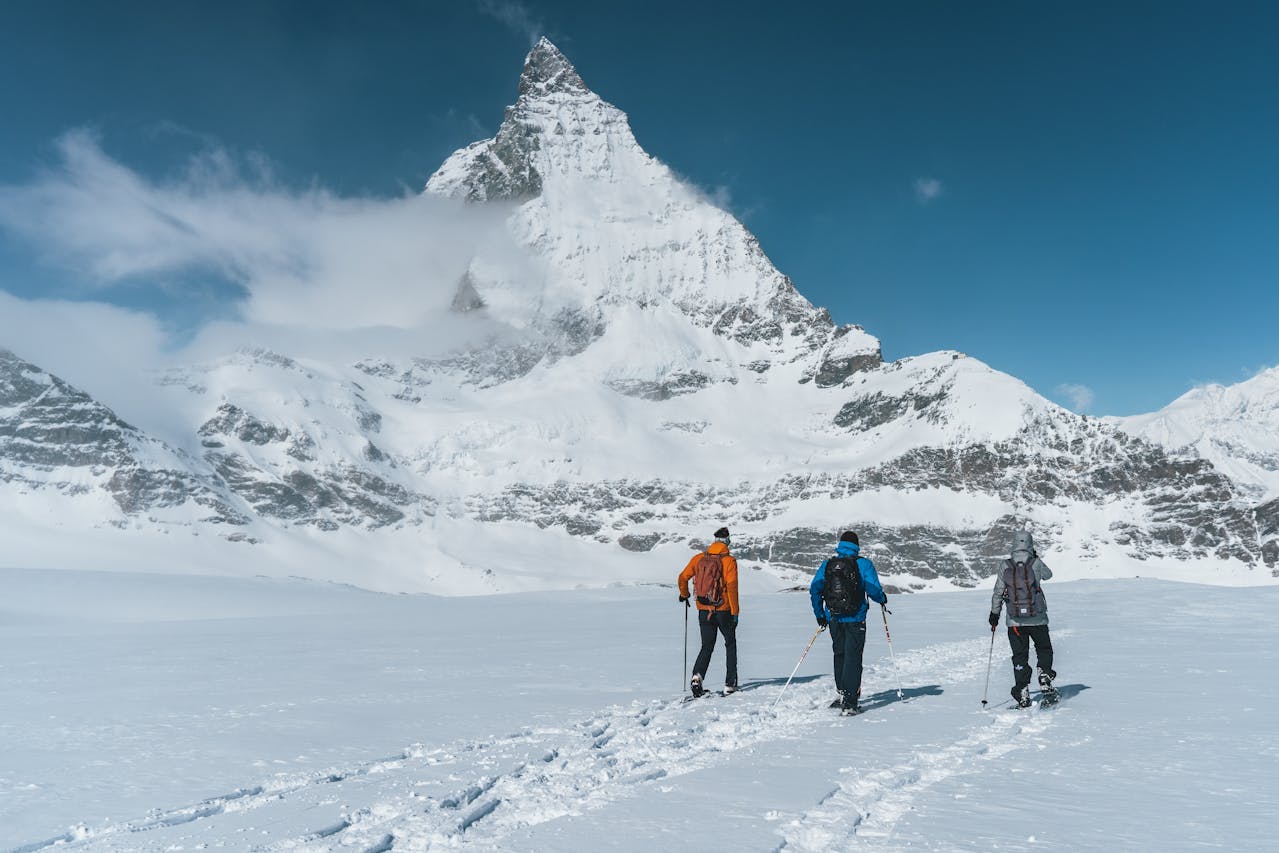
Winter hiking can be quiet, beautiful, and incredibly rewarding. Snow-covered landscapes feel completely different from summer trails. At the same time, cold weather brings new challenges, and the right gear becomes even more important than in warmer months. This article focuses on practical winter hiking equipment that helps you stay safe, warm, and comfortable.
Essential winter hiking gear
In winter, the right gear depends heavily on the weather conditions. Fresh snow, ice, wind, or changing temperatures can all affect how a trail feels: A trail that looks easy on the map may be icy, steep, or covered in deep snow. Based on what you expect on the trail, you can then choose the gear that will keep you moving safely and comfortably.
Trekking poles with snow baskets
If you expect snow on the trail, trekking poles become even more useful than in summer. Snow baskets prevent the poles from sinking too deep into soft snow and give you better support with every step. They help with balance on uneven terrain and reduce strain on your knees, especially when walking downhill or carrying a heavier backpack.
Crampons for icy or steep terrain
On icy trails or steep sections, normal hiking boots are often not enough. Crampons provide extra grip and help prevent slipping. Even lightweight crampons can make a big difference when crossing frozen paths, compact snow, or exposed sections.
Snowshoes for deep snow
If the trail is covered by deep, soft snow, snowshoes can completely change your experience. Without them, every step sinks in and quickly drains your energy. Snowshoes spread your weight over a larger area, making it easier to move forward and enjoy the hike. They are especially useful on less-traveled paths, after heavy snowfall, or when exploring open areas where the trail is not packed down.
If deep snow is part of your plan, snowshoes are often the key piece of gear that makes the hike possible at all.

Small items that make a big difference
Even small items can have a surprisingly big impact on your comfort and safety. Cold temperatures, short daylight hours, and limited places to rest make it important to think beyond just clothing and footwear. A few lightweight extras in your backpack can help you stay warm, take proper breaks, and handle unexpected situations more comfortably.
Hand and foot warmers
Cold hands and feet can quickly take the fun out of a winter hike. Hand and foot warmers are small heat packs designed to help keep your fingers and toes warm in low temperatures.
Hand warmers are usually placed inside gloves or mittens. They are helpful during breaks, when your hands cool down quickly, or when you need to use your phone or camera in cold conditions. If you tend to get cold fingers, keeping a pair of hand warmers in your backpack is a simple and effective solution.
Foot warmers (or toe warmers) work in a similar way. They are placed inside your footwear, on top of your socks or under your toes. They help maintain warmth when walking on snow or frozen ground and are especially useful if you plan a longer hike or expect low temperatures. Warm feet improve comfort and help you stay focused on the trail instead of the cold.
Headlamp or flashlight
Winter days are short, and darkness can arrive faster than expected. A headlamp or flashlight ensures you can see the trail clearly if your hike takes longer than planned. A headlamp is especially practical because it leaves your hands free, which is useful when using trekking poles or handling equipment in the cold.
Sunscreen and lip balm
Even in winter, the sun can be surprisingly strong, especially when it reflects off snow. Sunscreen helps protect exposed skin, while lip balm prevents lips from drying out and cracking in cold, windy conditions. These small items are easy to forget, but they can make your hike much more comfortable.
Foam pad
A foam pad is a simple but very practical item for longer hikes in winter. It insulates you from the cold ground when you sit down for a break, helping you retain body heat. Even short stops feel much more comfortable when you’re not sitting directly on snow or frozen ground. In case you need to rest longer or wait out bad weather, a foam pad can also provide basic insulation in an emergency.

Food and hydration for winter hiking
In cold weather, your body works harder to stay warm and keep moving, which means it needs more energy than during a summer hike. Even if the pace feels slower, you burn calories faster. Bringing enough food and snacks helps keep your energy levels stable throughout the hike.
Choose foods that are high in calories and easy to eat in cold conditions, such as nuts, dried fruit, energy bars, sandwiches, cheese, or bread. Small snacks you can eat quickly during short breaks work better than one large meal.
Hydration is just as important in winter as it is in summer, but it’s easy to forget to drink when it’s cold. Cold air and physical effort still lead to fluid loss, and dehydration can reduce both energy and concentration. Carry water in insulated bottles if possible, and take regular sips during the hike. Carrying a warm drink, such as tea, supports hydration and adds extra comfort on cold days.

Winter hiking does not mean carrying everything you own. It means choosing the right gear for the conditions you expect. Even on well-known trails, winter can change things quickly. Good preparation helps you focus on what matters most: enjoying the quiet trails, the fresh air, and the unique atmosphere that only winter hiking can offer. With the right equipment, winter adventures can be just as rewarding as summer ones, if not more.
Sources:
https://www.outdoors.org/resources/amc-outdoors/outdoor-resources/winter-hiking-essential-gear-list/
https://www.climb-snowdon.co.uk/blog/winter-hiking-equipment-guide
https://www.trekking-mont-blanc.com/en/winter-hiking-gear-checklist